

Fashion month officially began in New York, where New York Fashion Week ran from September 10–15, 2026, before moving across the Atlantic for London Fashion Week from September 17–21, 2026.
Both cities presented their Spring/Summer 2027 collections, but they approached the season from distinctly different perspectives. New York leaned into optimism, color, nostalgia, and the continued reinvention of American fashion, with houses such as Coach, Ralph Lauren, Carolina Herrera, Tory Burch, Diane von Furstenberg, Proenza Schouler, and Thom Browne delivering some of the week’s most discussed collections.
London, meanwhile, placed a strong emphasis on British identity, creative experimentation, and homecomings, highlighted by the return of Alexander McQueen and Mulberry to the official schedule alongside established names and a new generation of designers.
New York Opens Fashion Month with a Celebration of American Style
New York set an unmistakably celebratory tone for Spring/Summer 2027. The season was particularly significant for several American houses marking major milestones: Coach celebrated 85 years, while Carolina Herrera and Michael Kors marked 45 years, and Rachel Comey celebrated 25 years. Rather than treating heritage as something static, many designers used their anniversaries as an opportunity to revisit familiar codes through a contemporary lens.
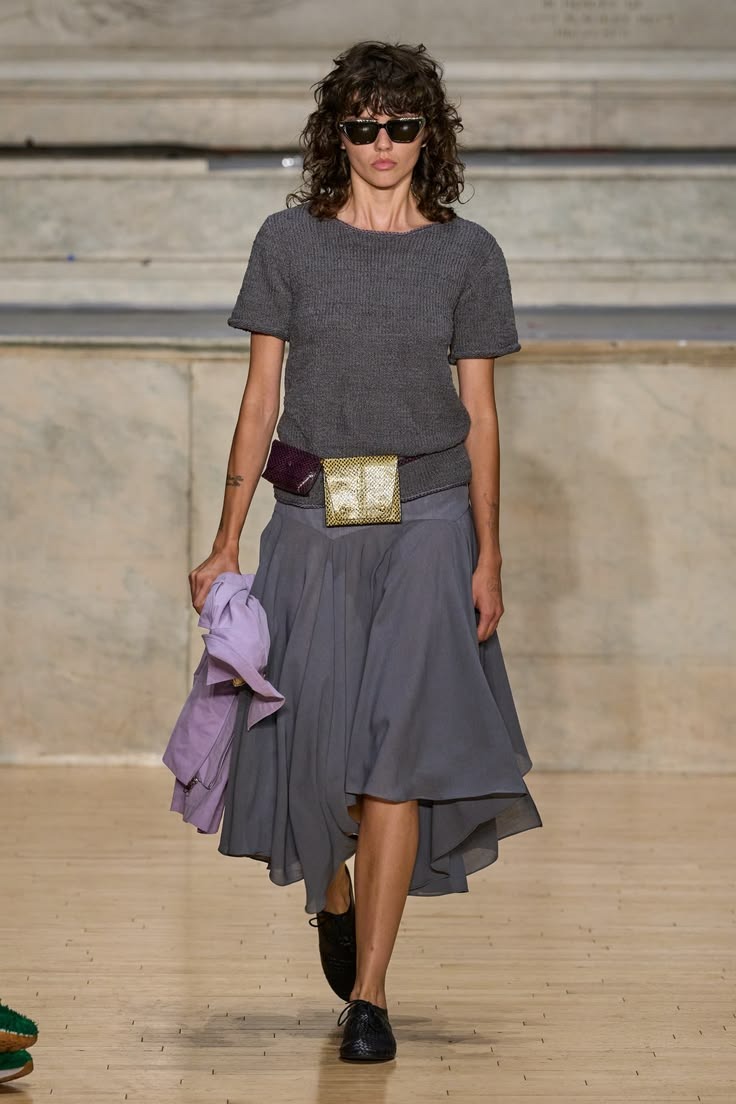
The season also reflected a renewed interest in American fashion’s own visual history. Ralph Lauren opened the week with a collection that drew on his long-established language of American luxury, while Tommy Hilfiger returned to the NYFW runway after a hiatus. Michael Kors, Tory Burch, Carolina Herrera, and Coach similarly demonstrated how established American brands could reinterpret recognizable signatures without simply reproducing their archives.
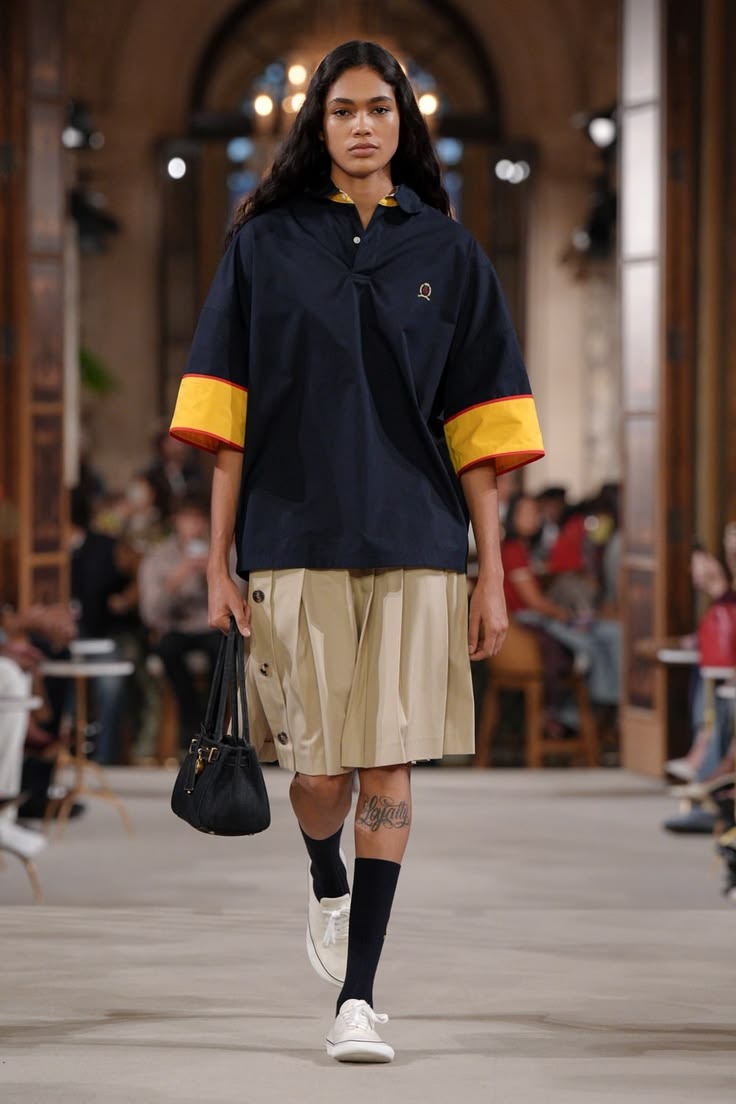
Chief Creative Officer Ralph Lauren explored the idea of personal style through a mix of rumpled luxury, tailored womenswear, denim, and evening pieces. The collection included grand gowns treated with a deliberately lived-in finish, alongside sharp trouser suits that drew directly from the designer’s tailoring heritage.
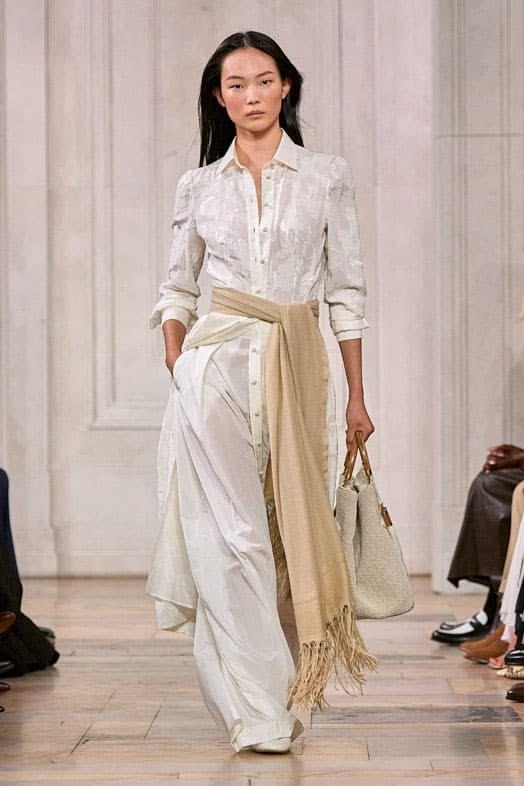
Coach, Proenza Schouler and Diane von Furstenberg Reworked the New York Wardrobe
Among the most closely watched collections was Coach, where creative director Stuart Vevers used the brand’s 85th anniversary to explore memory rather than produce a straightforward retrospective. The Spring/Summer 2027 collection combined long, lean proportions with slouchy trousers, cropped tops, rumpled tailoring, bias-cut dresses, exposed linings, leather, crochet, and distressed-looking finishes. The accessories were particularly important: Vevers reworked familiar Coach shapes, including the Brooklyn tote and Tabby, while introducing new treatments that made the bags look as though they had been turned inside out or customized over time. The show concluded with a youth orchestra from the Bronx, voguing dancers, and a burst of confetti—bringing the collection’s theme of celebration to life.
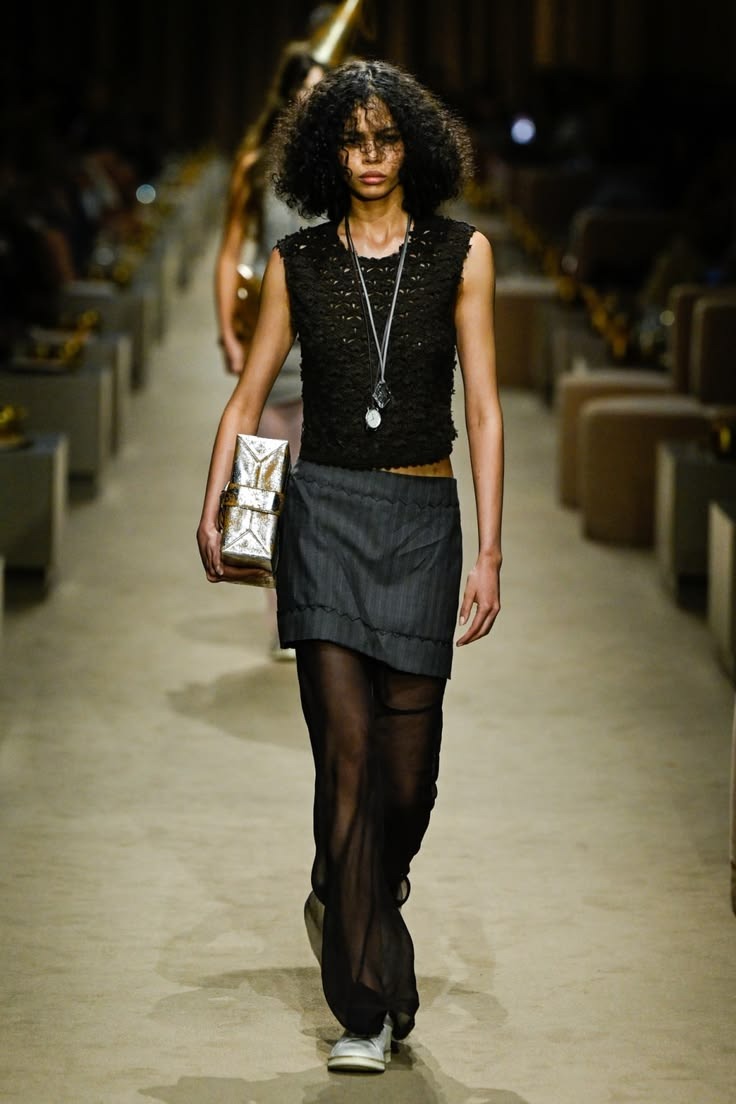
At Proenza Schouler, creative director Rachel Scott continued developing her vision for the house after succeeding founders Jack McCollough and Lazaro Hernandez. Her Spring/Summer 2027 collection explored the freedom of New York dressing, where formal and casual pieces can coexist without strict rules. Sequined gowns appeared alongside more relaxed daywear, while darting, pleating, geometric peplums, crochet, and zebra-patterned jacquards added texture and graphic impact. One of the collection’s most significant fashion moments was the return of the PS1, reimagined as the PS1 Walker in collaboration with Reed Krakoff. The new version retained the recognizable messenger shape and silver hardware while giving the classic bag a softer, more curved construction.
Image Source: https://pin.it/3xFaEZ0Lc
Diane von Furstenberg also entered a new chapter under artistic director Henry Zankov, whose first runway collection for the house marked its return to the NYFW calendar after roughly a decade. Instead of relying solely on the iconic wrap dress, Zankov expanded the idea of wrapping into draped T-shirts, crossed ballerina tops, scarf-like panels, and fluid silhouettes. Tomato red, peacock blue, jade, and fuchsia brought energy to the collection, while archival leopard and new geometric prints connected the new direction to DVF’s history.
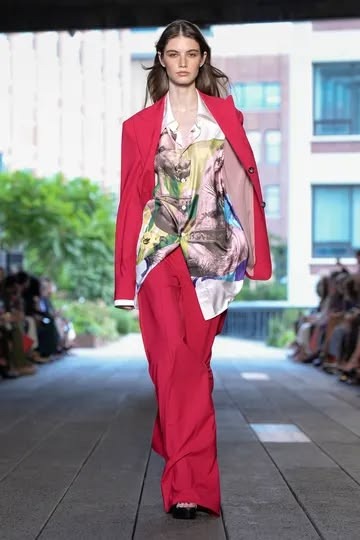
Carolina Herrera and Tory Burch Put a More Expressive Spin on Femininity
Carolina Herrera, under creative director Wes Gordon, celebrated the house’s 45th anniversary with one of New York’s most overtly glamorous collections. The show opened with black-and-white polka dots before moving into yellow, periwinkle blue, pistachio, dusty pink, sequins, organza, and chiffon. Herrera signatures were reworked throughout: the crisp white shirt appeared with cigarette pants, cummerbunds, and sheer skirts, while shirtdresses, pencil skirts, ruffled gowns, and embroidered jackets reinforced the house’s distinct style.
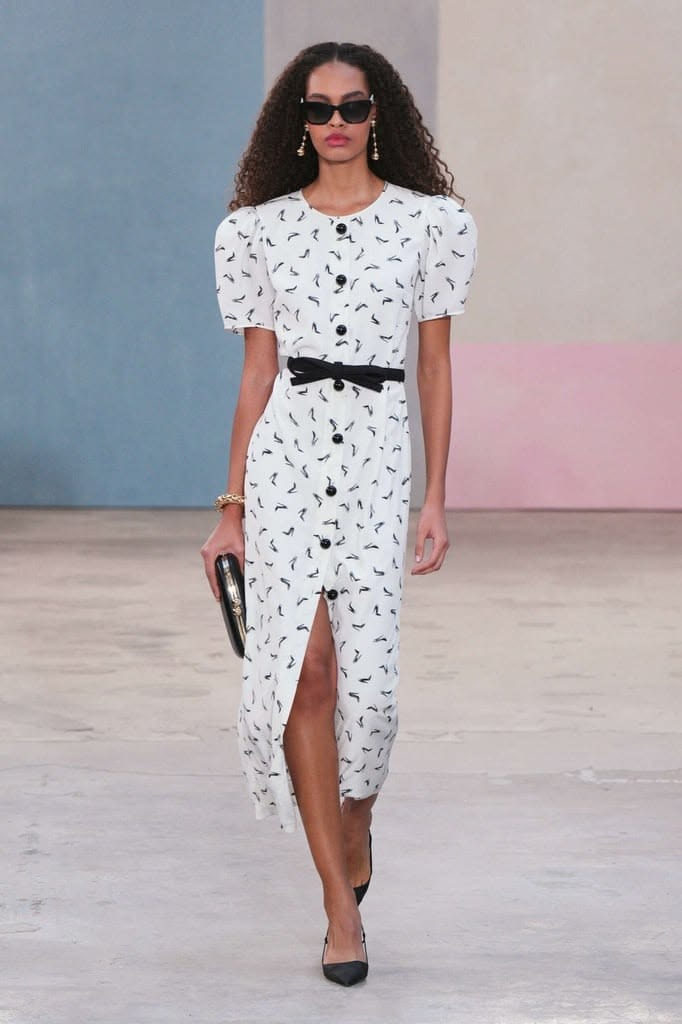
The collection also connected Herrera’s past with New York’s cultural history. Gordon collaborated with the Andy Warhol Foundation on a dress featuring Warhol’s portrait of Herrera, while a collaboration with The New Yorker translated an archival magazine cover into beaded organza pieces. The result was a collection that used Herrera’s recognizable codes as a foundation for a contemporary wardrobe.
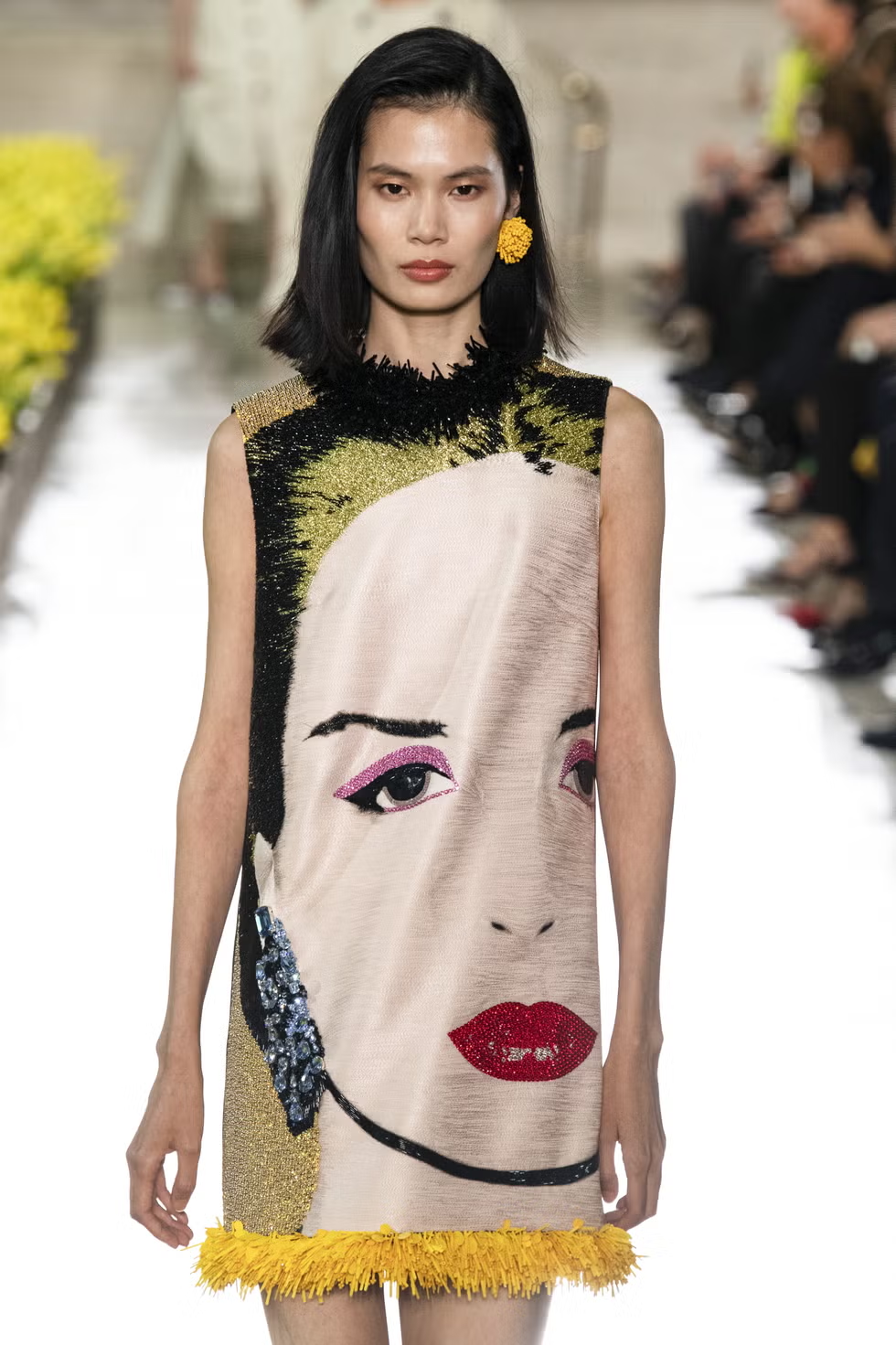
At Tory Burch, the approach was more eclectic. Her Spring/Summer 2027 collection explored the pleasure of getting dressed, mixing what Harper’s Bazaar described as “opulent femininity” with American practicality. Rich color combinations—including violet, peach, brick, buttery yellow, and a distinctive green inspired by a Venetian slipper—were paired with unusual accessories and textured details. Woven leather shoes, tassel-like scarves, and statement pieces reinforced Burch’s interest in combining decorative elements with everyday wear.
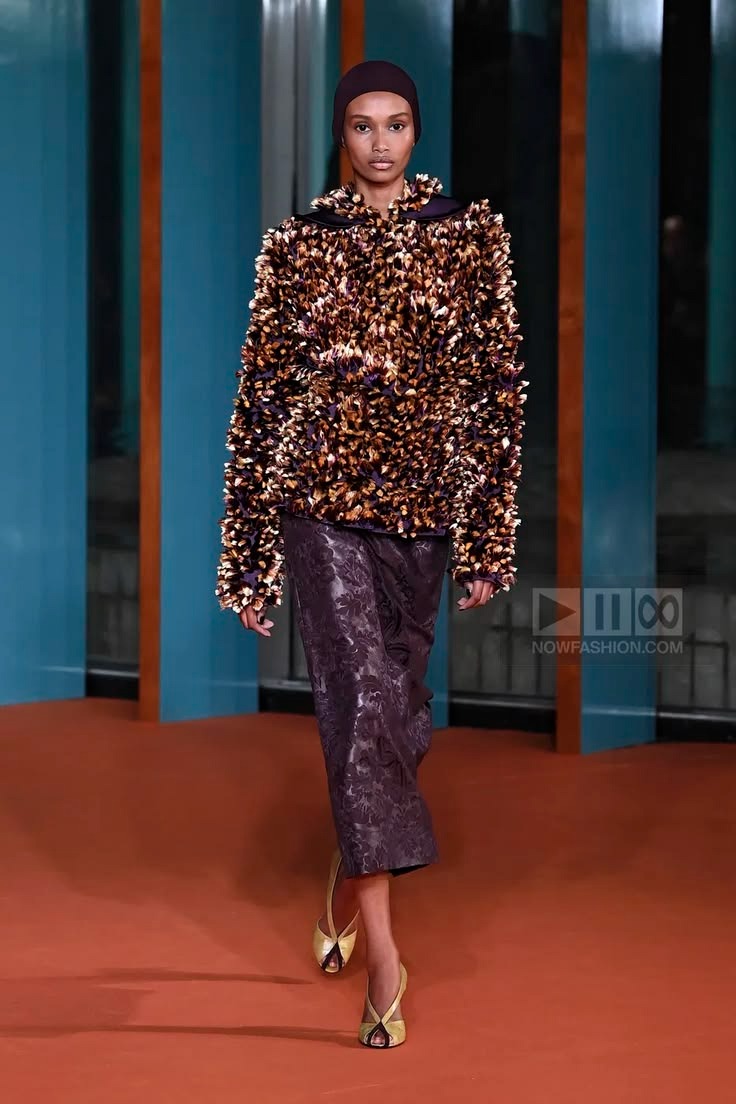
Together, these collections pointed toward a broader New York direction for Spring/Summer 2027: femininity did not have to mean restraint, and heritage did not have to mean repetition.
Thom Browne Closed NYFW with a Garden of Metamorphosis
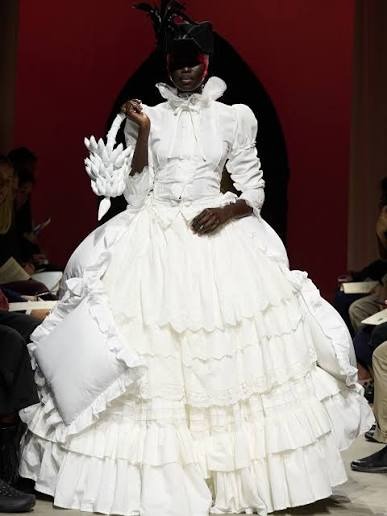
New York Fashion Week concluded with Thom Browne, who transformed The Shed at Hudson Yards into an elaborate garden for his Spring/Summer 2027 presentation. At the center of the setting stood a giant chrysalis surrounded by green tendrils and leaves, establishing the collection’s central theme of transformation.
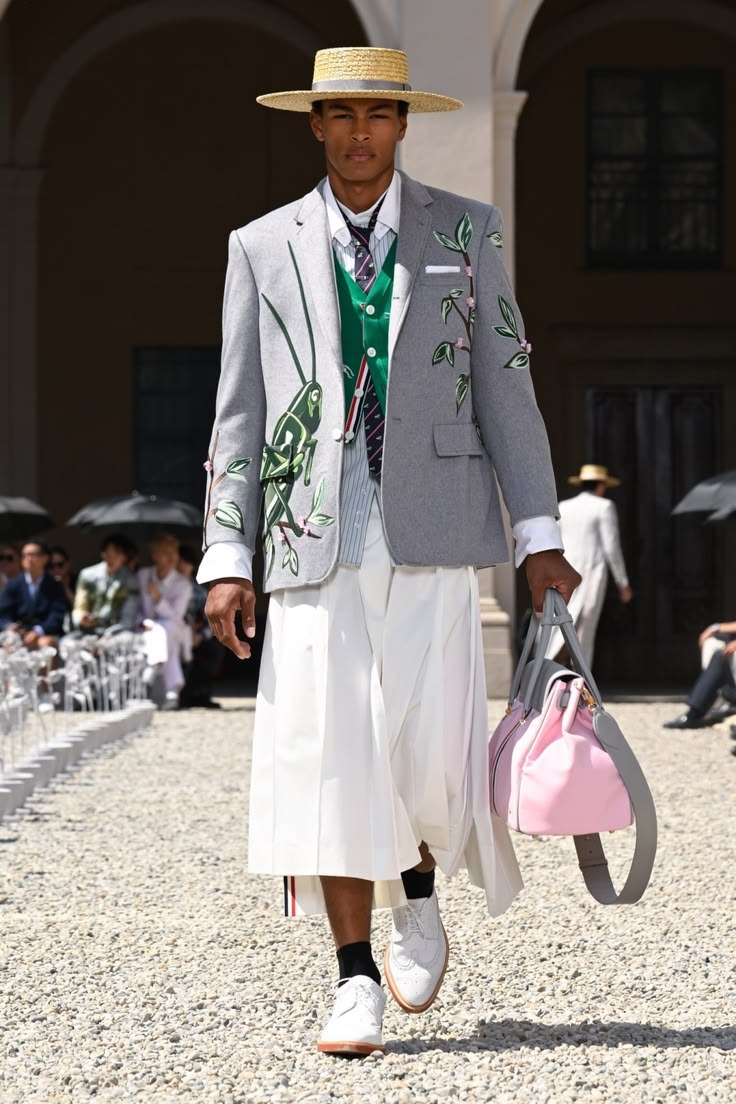
Browne translated that idea into his signature tailoring. Butterflies, bees, and other insects appeared across sharply structured tweed jackets and knitwear, while the collection developed from more restrained tailoring into increasingly elaborate interpretations of the natural world.
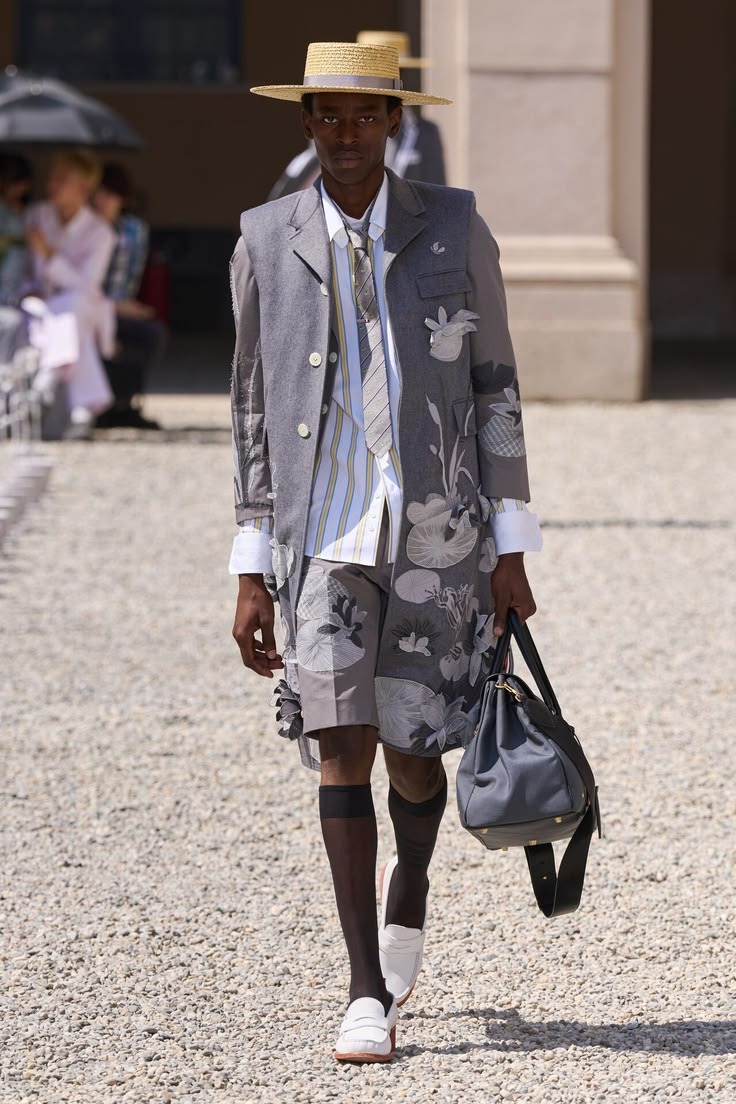
The finale was the perfect conclusion to a New York season that repeatedly returned to ideas of celebration and reinvention. Rather than simply presenting another set of spring clothes, Browne used the runway itself as part of the collection’s narrative—turning fashion into a theatrical transformation from cocoon to something entirely new.
London Brings British Heritage Back to the Forefront
Just two days after New York closed, London Fashion Week opened on September 17 and runs through September 21. The British Fashion Council’s schedule features 47 catwalk shows, 23 presentations, 10 digital activations, and 53 evening events, bringing together established houses, emerging designers, and NEWGEN talent.
The biggest story of the week was arguably the return of Alexander McQueen to the official London Fashion Week schedule. Under creative director Seán McGirr, McQueen presented its Spring/Summer 2027 collection in London on September 20. It was the house’s first official LFW show since 2001, making the return particularly significant given the brand’s deep connection to the city and its founder’s history there. McGirr described London as a place of freedom and used the collection to continue developing his interpretation of the McQueen vocabulary rather than simply recreating the past.
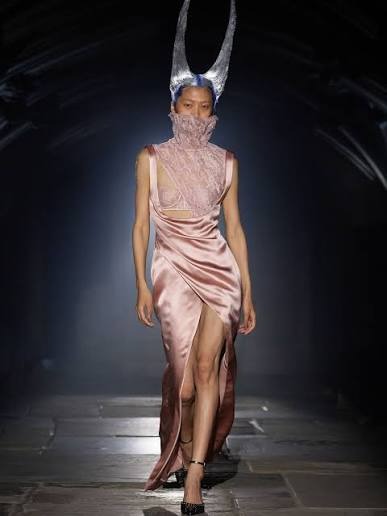
The collection itself brought together contrasting sides of London. Sharp tailoring and structured silhouettes met undone, more rebellious styling, reflecting the city’s long-running tension between traditional British dress and underground culture. A silver hourglass dress layered metallic foliage over jacquard, while other looks explored exaggerated proportions, ornamentation, and the house’s characteristic sense of drama. ELLE described the collection as a meeting point between Savile Row-style tailoring and rave-influenced London dressing.
Christopher Kane Reimagines Mulberry Through Leather and the Bayswater
Another major London moment came from Christopher Kane’s debut as creative director of Mulberry. The appointment brought Kane back to the runway and placed a designer known for subverting traditional British fashion at the helm of one of Britain’s best-known leather-goods houses.
For his first Mulberry collection, Kane looked directly to the brand’s identity, particularly the Bayswater. The bag’s distinctive flap and curved cutouts became design motifs across the clothing, appearing in leather outerwear, dresses, skirts, and other pieces.
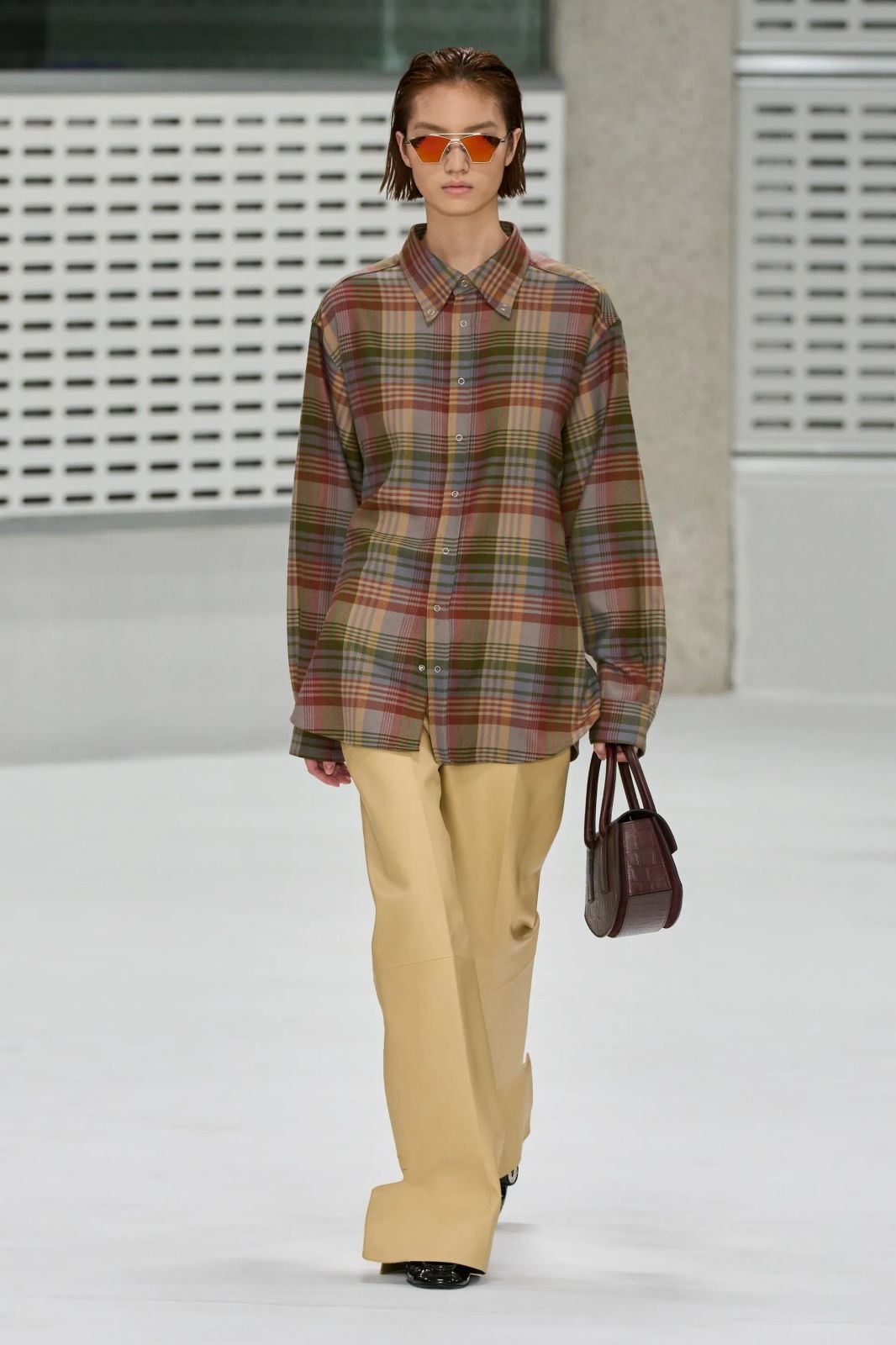
The collection, titled “City, Town, Country,” moved through a restrained palette of black, white, gray, cream, caramel, and chocolate, punctuated by brighter hues such as a neon-orange hooded parka. Most importantly, leather was not treated simply as an accessory material—it became a central part of the collection’s silhouette and construction.
For a leather house with a strong handbag legacy, the approach was particularly notable. Instead of placing the Bayswater on the sidelines as an accessory, Kane allowed its design language to influence the clothes themselves.
London’s Established Houses and New Generation Share the Spotlight
McQueen and Mulberry may have been the biggest homecomings, but London Fashion Week’s identity was never limited to its established houses. Simone Rocha, Erdem, Emilia Wickstead, Roksanda, Richard Quinn, Burberry, Harris Reed, Barbour, Chopova Lowena, KNWLS, Aaron Esh, Ashley Williams, and Paolo Carzana were among the established and independent names featured across the schedule.
Simone Rocha continued to explore her distinctive balance of romance and severity for Spring/Summer 2027. Her collection used stark black and chalk white as a foundation before introducing intense scarlet, combining delicate and tougher elements in the same looks. The result continued Rocha’s interest in tension—between softness and structure, femininity and severity, and decoration and restraint.
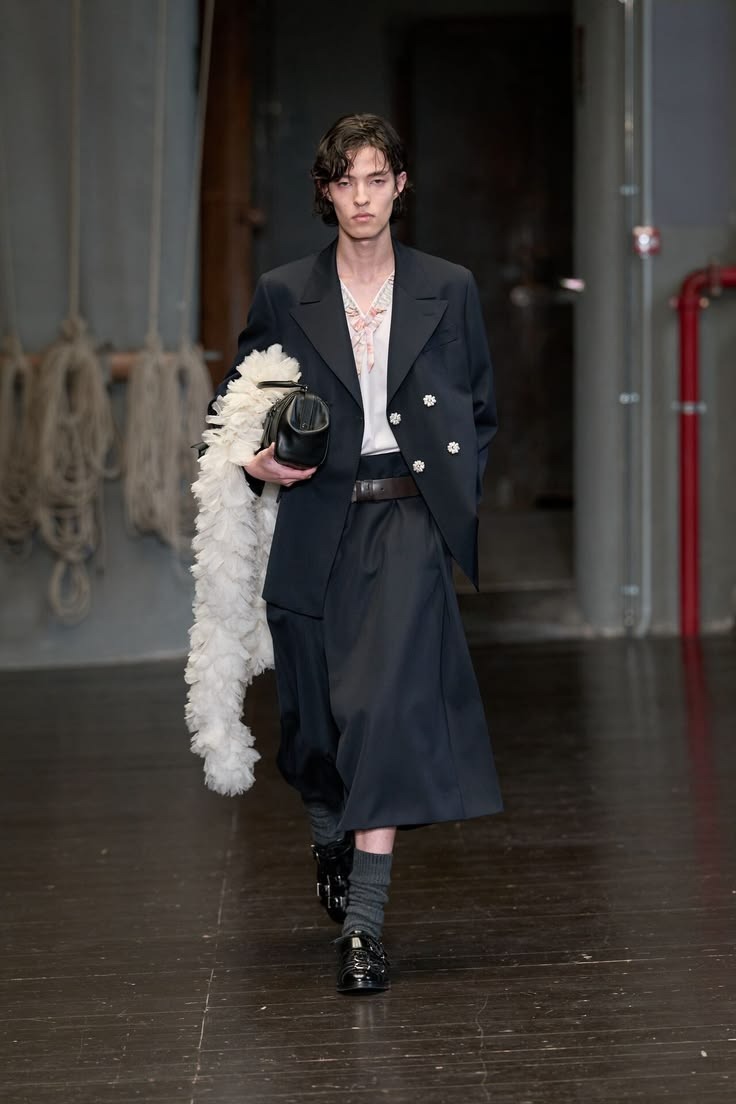
At the emerging end of the spectrum, the British Fashion Council’s NEWGEN programme introduced designers including Francesca Lake, Gui Rosa, and Petra Fagerström. Francesca Lake’s “Wake the Town” explored Jamaican masquerades and processions through her signature distorted or “glitched” approach to wardrobe staples, while her SS27 presentation also introduced her first bag, created in collaboration with ETMFG. Other young labels—including AGRO Studio, Joyce Bao, Lovebirds, Onalaja, Charlie Constantinou, and Liza Keane—added further variety to the week.
London also expanded the traditional runway format. Marks & Spencer made its first LFW catwalk appearance with a “see now, buy now” collection, while H&M collaborated with photographer Nick Knight and SHOWstudio on a different interpretation of the fashion show. eBay returned with its pre-loved Endless Runway, further reflecting the growing overlap between runway presentation, retail, technology, and circular fashion.
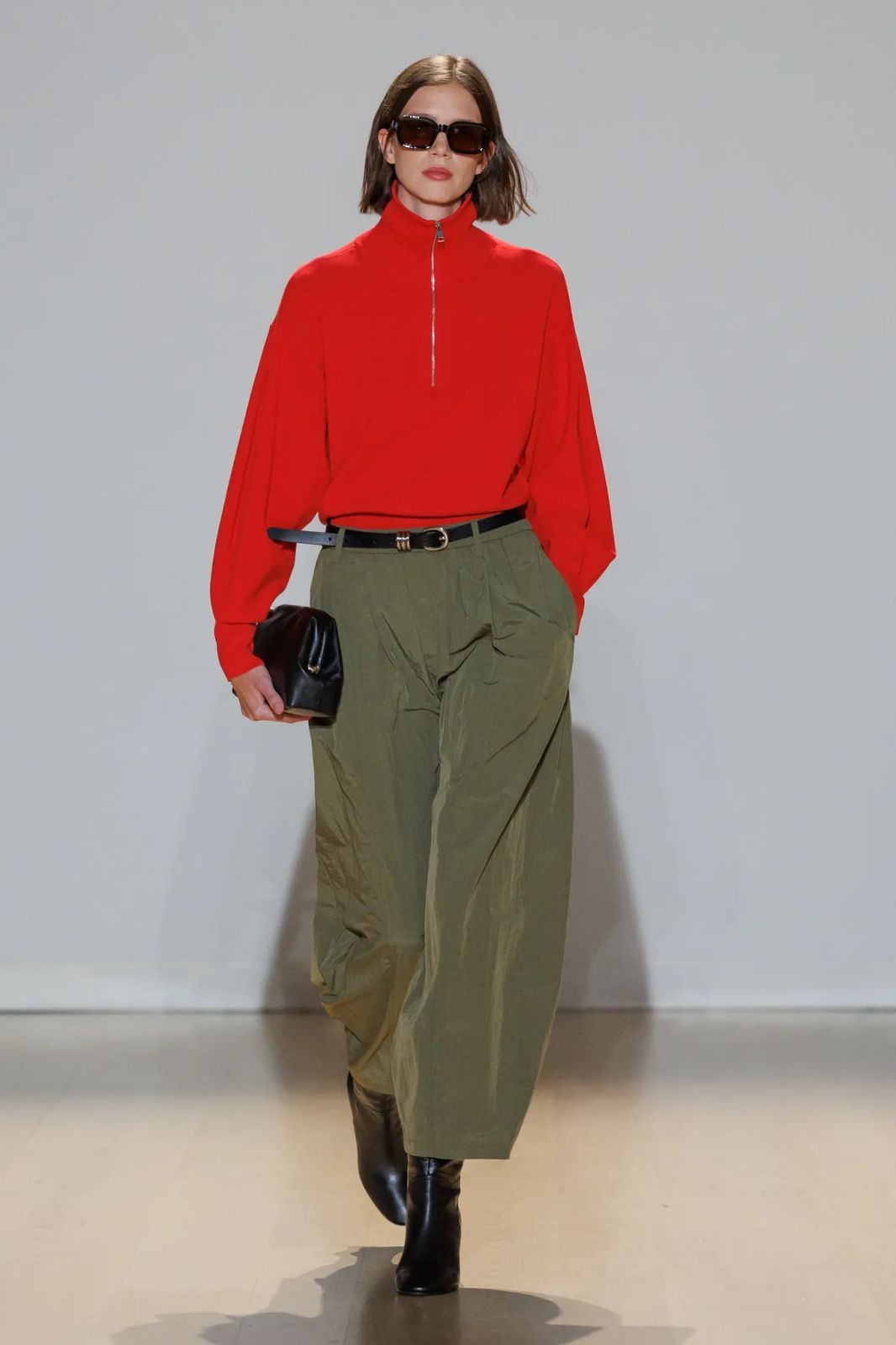
From New York’s joyful celebration of American fashion to London’s return to British heritage and experimental design, the first two stops of the Spring/Summer 2027 fashion calendar offered very different but complementary visions of what comes next. Coach, Proenza Schouler, Diane von Furstenberg, Carolina Herrera, Tory Burch, and Thom Browne demonstrated how established New York names can reinterpret their signatures through new proportions, color, accessories, and creative direction. In London, McQueen, Mulberry, Simone Rocha, Erdem, Roksanda, Burberry, and a new generation of designers showed how British fashion continues to balance heritage with experimentation.
The runway may be where these ideas first appear, but the best pieces are meant to continue beyond fashion week. For leather bags, shoes, wallets, and other cherished pieces inspired by the season’s trends, Doctor Leather provides expert repair, restoration, color change, leather and lining replacement, hardware services, and authentication to help well-loved pieces stay in rotation. When your favorite leather deserves more than a quick fix, bring it to the experts at Doctor Leather and give it another chapter.
Visit us at: Abreeza Mall, Ayala Bacolod, Ayala Center Cebu, Alabang Town Center, Eastwood, Market Liberty-Evia Lifestyle Center, Glorietta 5, Greenhills, Greenbelt 5, Mitsukoshi BGC, Ayala Malls Solenad, SM Aura, SM City Baguio, SM City BF Parañaque, SM Fairview, SM Mall of Asia, SM Megamall, SM North EDSA, SM City Pampanga, SM City Iloilo, The Mall | NUSTAR Cebu, Trinoma, U.P. Town Center.
See you there!