

In an era when fast fashion dominates wardrobes, many consumers in the Philippines and beyond are unknowingly fueling a growing fashion waste crisis—and counterfeits play a hidden but significant role. According to Entrupy’s State of the Fake 2025 report, the counterfeit rate in resale markets remained around 8.4% in 2024, showing just how pervasive fake goods continue to be.
In the Philippines, counterfeit goods are a serious issue, between January and December 2024, the National Committee on Intellectual Property Rights (NCIPR) seized record-high ₱40.99 billion worth of counterfeit products, 52% higher than the previous year. These imitations not only undermine brand integrity but also contribute to environmental degradation—since counterfeit fashion is typically made cheaply, disposed of quickly, and lacks systems for repair or reuse.
In this article, we explore how fast fashion and counterfeits interconnect, contributing to waste and pollution, and how reliable authentication offers a part of the solution.
The “Wear-Once” Culture
Fast fashion thrives on taking new trends, mass-producing at low cost, and encouraging consumers to replace garments frequently. Because the price is low, durability is often sacrificed. Many items are worn only a few times—or even once—before being discarded. The result? Globally, about 92 million tons of textile waste are discarded every year.
In the Philippines, this resonates with consumers seeking style at low cost. But it also normalizes disposability: items that break, stain, or go out of fashion are simply thrown away rather than repaired or authenticated. When counterfeit goods enter this ecosystem, they accelerate the cycle because of cheap, low-quality materials.

Counterfeits as Fuel for Waste
Counterfeit fashion items are designed to attract attention, not durability. They’re often made with substandard materials, poor stitching, and non-repairable parts. Because the buyer often realizes the flaws quickly such as peeling surfaces, fading colors, or seams tearing, the item is discarded sooner—adding to landfill burden.
Entrupy’s 2025 report notes that despite efforts, the counterfeit rate has not dropped significantly: in 2024, the rate for bags and sneakers only declined marginally from 8.9% to 8.4%. This means counterfeits remain a constant presence in the fashion market.
Moreover, many counterfeits escape detection; consumers may think they purchased the original, and then lack the willingness or means to repair or authenticate the item. Fake goods rarely come with warranties or aftercare support, pushing them further toward disposal rather than restoration.
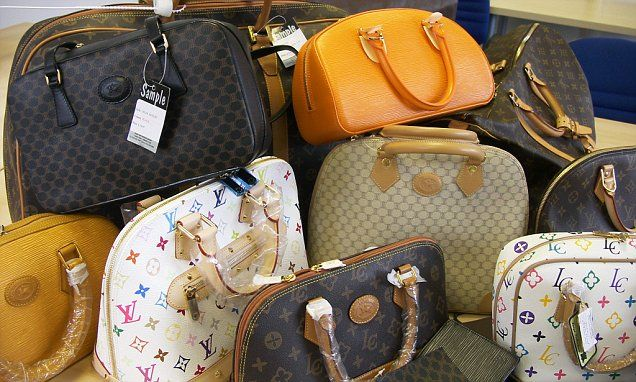
Environmental & Social Costs
When counterfeit goods are discarded, they often end up in landfills or informal dumpsites, leaching dyes, plastics, and chemicals into soil and water systems. Because these items are not built for longevity, they degrade faster, releasing microplastics and toxic compounds.
Also, fashion production for both fast fashion and counterfeit goods are resource-intensive. The fashion industry contributes roughly 10% of humanity’s carbon emissions and uses massive amounts of water. By increasing consumption and disposal through knockoffs and trend-chasing, the environmental footprint expands.
On the social side, counterfeit production is often tied to labor exploitation, unsafe manufacturing conditions, and lack of regulatory oversight. These illegal supply chains allow behaviors that would be unacceptable in legitimate operations.
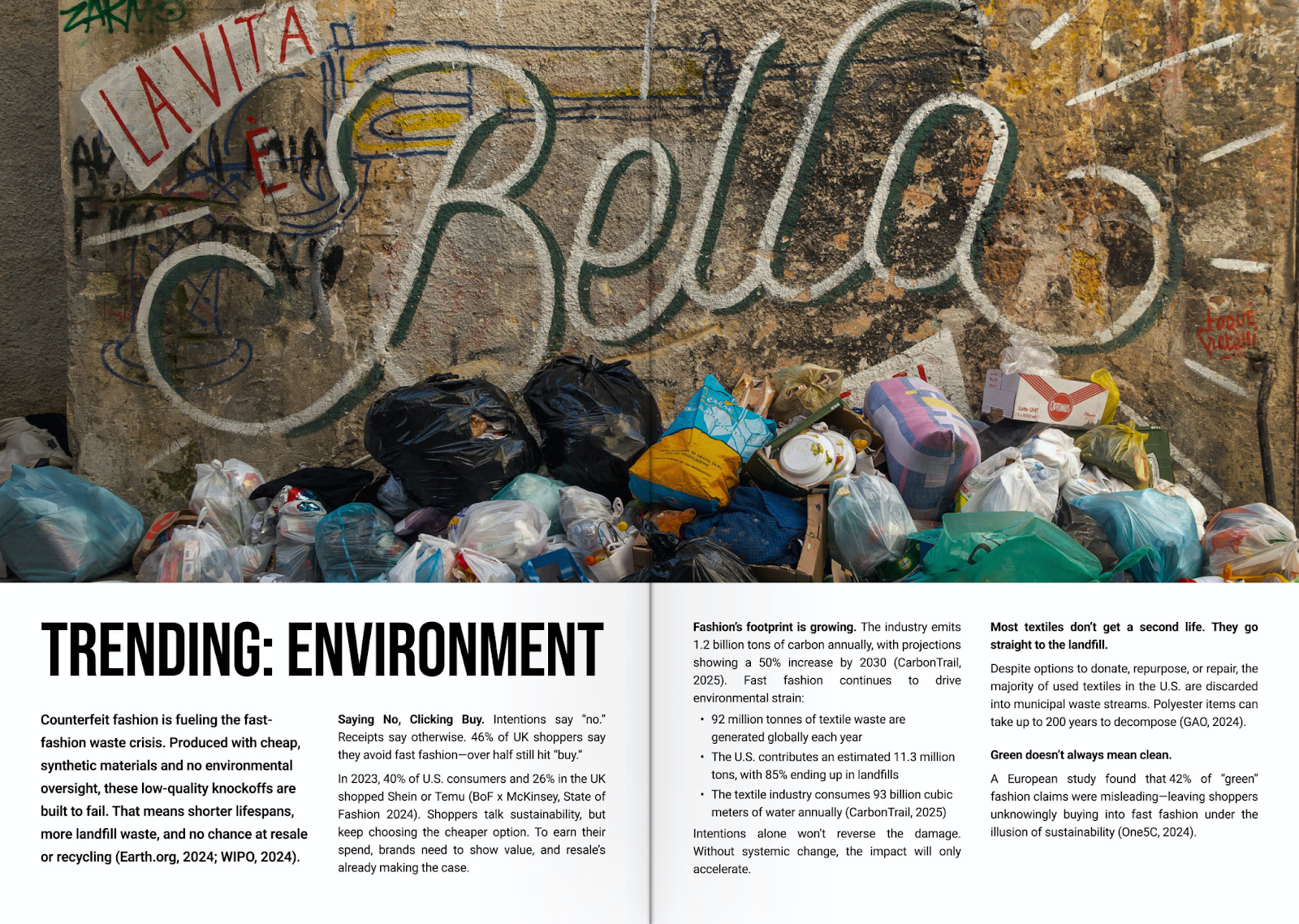
Fast fashion and counterfeits form a vicious cycle: cheap and plentiful imitations encourage disposability, fill landfill space, and erode trust in fashion. But we don’t have to passively accept that. Authentication brings accountability.
That’s where Doctor Leather steps in—with our partnership with Entrupy, we help you distinguish the genuine from the fake and support a culture of care, repair, and longevity.
If you own luxury accessories and want assurance, bring it to us. Our experts use Entrupy’s proven systems to authenticate your piece, giving you confidence while helping reduce waste.
Let’s shift the narrative from “fast & disposable” to “trusted & lasting.”
Find us at these branches with our authentication service: Abreeza Mall, Ayala Center Cebu, Alabang Town Center, Glorietta 5, Greenhills, Greenbelt 5, Ayala Malls Solenad, SM Aura, SM City Baguio, SM City BF Parañaque, SM City Iloilo, SM Mall of Asia, SM Megamall, Trinoma, and U.P. Town Center.